
Commentary |
Non refereed |
The porcine reproductive and respiratory syndrome quandary. Part I: Fact versus speculation
William L. Mengeling, DVM, PhD, Diplomate ACVM
Department of Veterinary Microbiology and Preventive Medicine, College of Veterinary Medicine, Iowa State University, Ames, Iowa
Cite as: Mengeling WL. The porcine reproductive and respiratory syndrome quandary: Fact versus speculation. J Swine Health Prod. 2005;13(2):91-95.
This is the first part of a two-part article. The second part will appear in the May-June 2005 issue of the Journal of Swine Health and Production.
Despite a great deal of research on porcine reproductive and respira- tory syndrome (PRRS) during the past 15 years, our understanding of this disease and its causative agent, PRRS virus (PRRSV), is far from complete, and as one of the consequences, PRRS prevention and control remains a major challenge.
Over the years, many of our efforts have focused on the development of PRRS vaccines that we hoped would be just as effective as those used to help prevent several other economically important viral diseases of swine (eg, swine fever, pseudorabies, parvovirus-induced reproductive failure, and swine influenza), but unfortunately, this has not been the case. While attenuated-live-virus PRRS vaccines do provide clinical protection under many circumstances, and in such cases are clearly cost effective, the level of protection is too often less than what we have come to expect from past experiences with many other attenuated-live-virus vaccines.
Keep in mind the shortcomings of PRRS vaccines are not due to a lack of research effort, time, or financial commitment in regard to their development. It is possible that at least as much time, effort, and money have been invested in developing PRRS vaccines as in developing any other viral vaccine for pigs. The reason for this emphasis on PRRS vaccines is not simply chance. It partly reflects the dedication of the research community and the biologics industry to solving a major problem. From a more pragmatic and commercial point of view, it also reflects the enormous economic impact of PRRS ($560 to $760 million annually in the United States alone1) and the potential international market and financial reward for developing a highly efficacious product.
Another piece of the PRRS puzzle that is still less than a perfect fit is the one labeled epidemiology. We know that PRRSV can be spread from pig to pig through direct and close contact. The question that is as yet unanswered with certainty is just what the probabilities are for virus spreading by means other than close contact, for example, wind currents, needles used for routine injections, insects, and other animals. Transmission via prevailing winds seems the most likely explanation for virus transmission among herds maintained in high security environments. To date, aerosol transmission of PRRSV has been experimentally confirmed for only relatively short distances,2 and in some cases, only inconsistently.3 Unfortunately, experimental studies typically comprise relatively few pigs. If probabilities are low, for example, 1 in 10,000 (ie, a probability that would likely be undetected experimentally), such spread might still be possible with large herds comprising thousands of swine exposed daily to potentially virus-laden aerosols from an infected herd some distance away. Of course, an important facet of the epidemiology piece of the puzzle is the amount of PRRSV required to infect a pig. For this reason, the topic of infectious doses, as well as various potential means of virus transmission and how they can be interpreted in regard to epidemiology, will subsequently be discussed in greater detail.
Several individual issues related to PRRS are addressed in the context of what is, or is probably, a fact; is currently speculation but likely to be true on the basis of one or more known facts; or is purely speculation without factual basis, ie, simply an idea. Much of the emphasis will continue to be on immunoprophylaxis and epidemiology, which are surely key issues in the quest for PRRS prevention, control, and perhaps eventual eradication. Please keep in mind the following. First, my experiences (ie, in regard to research studies and field investigations) have been almost completely with North American strains of PRRSV and the associated clinical disease. However, as more is learned about European strains of PRRSV and the related consequences of infection, it appears that there are more similarities to the North American situation than previously thought.4,5 Second, what may seem to be fact (or conversely, simply speculation) to one person may be interpreted somewhat differently by another.
Fact versus speculation
Virulent virus exposure as a means to induce immunity
Within the last couple of years, largely as a result of their disenchantment with currently available vaccines, some producers and veterinarians in the United States have opted to expose PRRS-naive gilts to fully virulent PRRSV before conception. The objective is to induce a solid immunity to reproductive failure should the gilts be exposed to virulent virus during gestation. The strain of virulent virus chosen for "vaccination" is usually the one most recently isolated from pigs, gilts, or sows of the same herd, and one that is presumably the only or at least the predominant strain currently circulating in the herd. Their rationale is their belief that fully virulent virus will stimulate a more forceful immune response than will an attenuated virus. If the same gilts are exposed to PRRSV during gestation, it will likely be to the same strain with which they were vaccinated (a potential advantage if it is assumed that strains are only partially cross-protective).
However, there are some major concerns about this approach. First, there is always the possibility of untoward reaction following exposure of naive gilts or sows to fully virulent PRRSV. Second, the exposure of each new group of replacement gilts to fully virulent virus is almost surely a commitment to continuous circulation of that strain in the breeding herd - with the potential for its dissemination to other segments of the production cycle as well as to neighboring herds (with attendant legal implications). Third, and of most immediate and direct concern, is the question of whether a single exposure to virulent virus prior to breeding really does provide a satisfactory level of immunity.
Although the idea that exposure to a fully virulent homologous strain of PRRSV before conception would provide a better immunity than similar exposure to an attenuated heterologous strain is logical, the degree of difference is not clear. To my knowledge, no one has yet confirmed, in an unbiased environment under controlled experimental conditions, that purposely using virulent virus stimulates sufficient immunity to consistently prevent subsequent reproductive failure. In fact, for the few on-farm examples that have come to my attention (ie, of using virulent virus to induce immunity followed by known exposure to the same strain of virulent virus during gestation), the level of protection has been less than satisfactory.6
Immunization by contact exposure during the general acclimatization of replacement gilts
What at one time seemed to many veterinarians to be a relatively inexpensive and promising way to induce immunity to PRRSV in replacement gilts has apparently fallen from grace. There are a number of permutations of this procedure, but the fundamental idea is to mix swine (eg, cull sows) that are shedding virulent virus with naive gilts during a so-called "gilt acclimatization" interval. The major deficiencies of this approach are, first, the difficulty in being confident that the individuals being placed in contact with replacement gilts are actually shedding PRRSV, and second, having PRRSV spread through the entire group of replacement gilts well before conception. The concern about untoward reactions following purposeful exposure of gilts to virulent PRRSV and the introduction of virulent virus into each new "batch" of gilts applies here just as it does following the injection of virulent virus. On the other hand, exposure by contact is probably less of a legal concern than a more direct means of exposure such as injection. Probably the worst-case scenario is to have a prolonged course of infection among gilts so that some are infected only shortly before conception and some after conception, even though the "official" acclimatization process has been completed.
The use of inactivated (killed) vaccine to boost antibody titers
It has been stated that "The main attribute of killed PRRSV vaccine is to boost antibody titers."7 I am unaware of any extensive controlled experimental studies to substantiate this statement. It is difficult to imagine how a vaccine that may fail to even raise a measurable level of antibody in a naive pig would appreciably boost the titer in an immune gilt or sow. What seems more likely, if inactivated vaccine is to have any role in PRRS immunity, is its use to sensitize (prime) the immune system.6 A possible scenario is the following. Pigs destined to become replacement gilts would be vaccinated twice with an inactivated vaccine that would raise a measurable level of antibody (eg, when tested by ELISA) sometime after the second vaccination. It is possible to prepare an inactivated virus vaccine (without concentration) that will raise a moderate level of ELISA antibody if a suitable adjuvant is incorporated. Ideally, the vaccinal virus would be the strain circulating in the destination herd, but there is no reason to believe this is essential. At a much later date, but before conception, the gilts would be vaccinated with attenuated live virus. The idea is that priming the immune system with the homologous (or a heterologous) strain of PRRSV would enhance the magnitude of the immune response to subsequent vaccination.
Effect of vaccination on subsequent shedding of virulent virus
It has also been stated "... nor is there a vaccine that eliminates or even reduces virus shedding."7 Assuming that the incidence and magnitude of virus isolation from swine of any age, sex, or breed is directly linked with the likelihood of shedding, there is a plethora of definitive evidence that vaccination, and more specifically preexisting immunity, markedly reduces virus shedding.
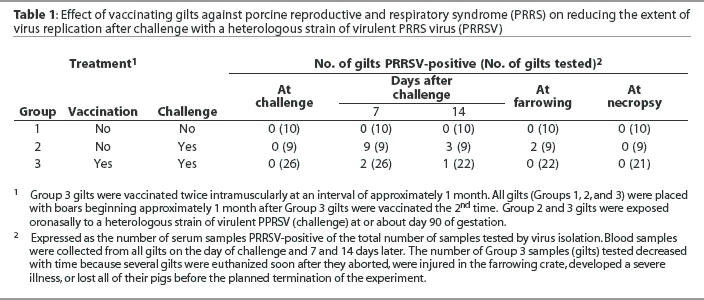
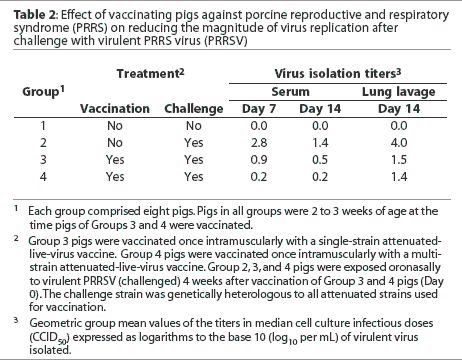
Data from two of our experiments completed at the National Animal Disease Center in Ames, Iowa, to determine the efficacy of vaccinating with attenuated live virus are summarized to illustrate the effect of vaccination on reducing the extent of infection in gilts (Table 1) and magnitude of infection in pigs (Table 2) challenged with virulent virus. The collective incidence of virulent PRRSV isolation (Table 1) after challenge was 14 virus-positive samples of 36 samples tested (38.9%) for nonvaccinated gilts, and three virus-positive samples of 91 samples tested (3.3%) for vaccinated gilts. The reduction in magnitude of PRRSV replication is evident in Table 2, in which the median cell culture infectious doses (CCID50) of virus isolated from pigs are presented as logarithms to the base 10 (log10). Although the log values seem fairly close, the actual numbers are quite different. For example (for quick reference) 102.8 = approximately 630 CCID50 per mL of serum, whereas 100.9 = < 10 CCID50 per mL and 100.2 = approximately 1.6 CCID50 per mL. Likewise, 104.0 = 10,000 CCID50 per mL of lavage fluid, whereas 101.5 = approximately 32 CCID50 per mL and 101.4 = approximately 25 CCID50 per mL. It appears that vaccination can result in more than a 300-fold reduction (10,000 32) in the magnitude of virulent virus in the lung of a vaccinated pig. If we extrapolate this finding to the likelihood of virus shedding, it is entirely possible that the likelihood of shedding is also reduced by more than 300-fold (or generally somewhat less if the comparison is made on the basis of viremia), a substantial difference.
The practical importance of infectious dose in regard to epidemiology
Previous studies have indicated the amounts of PRRSV required to infect pigs by either injection or intranasal exposure,8 and to infect gilts by artificial insemination.9 In both cases, the infectious dose is actually a comparative value. That is, in both studies, the titer of PRRSV was first determined in cell culture, then the pig or gilt infectious dose was reported on the basis of how many infectious virions or CCID50 were required for infection. Otherwise, an infectious dose by definition would simply be one. It was found that pigs were infected by either injection or intranasal exposure with 20 infectious virions. Lesser amounts were not tested.8 Gilts exposed by artificial insemination were infected consistently with either 2 x 10⁵ or 2 x 10⁶ CCID50, infrequently with 20,000 or 2000 CCID50, but not at all with 200 CCID50.9 Of course, the means by which the infectious dose was determined is always indicated in a scientific manuscript, but an infectious dose for the natural host is likely to be a comparative value (with the additional associated variables) rather than a direct measurement, ie, actually a titration in the natural host. It is too expensive to routinely make titrations in a natural host; therefore, an alternate host, commonly cell culture, is used. For example, for a series of 10 progressive 10-fold dilutions with 10 replications (to provide statistical confidence) for each dilution, 80 gilts and 80 individual isolation facilities would be required. The cost of such a titration method would be prohibitive for most laboratories. However, there are disadvantages to using an alternate host to determine infectious virions or CCID50, and then making statements concerning the number of CCID50 it took to infect a pig by the given route of exposure. Propagating the virus in the alternate host for several passages can change the result. For example, by testing a virus that has been passaged infrequently in cell culture, it may be determined that pigs can be infected with 20 or fewer infectious virions.8 However, we have found that after repeated passage of PRRSV in cell culture (251 passages to be exact), some pigs are not infected even when exposed to 2 x 10⁶ CCID50.10 The use of the term "infectious virions" in some cases and "CCID50" in others reflects the particular method of virus titration used in the experiment from which the data was extrapolated. To compare these values, consider that 1 CCID50 = 0.7 of an infectious virion - assuming both values were determined in the same type of cell culture. What we can glean from this discrepancy is that when an alternate host is used to determine infectious virions or CCID50, which are in turn used to suggest how little or how much virus is required to consistently infect the natural host, the titration should be done before that particular virus is adapted to the alternate host - and more importantly, away from the natural host. Otherwise, we may be influenced by factual but misleading information. The loss of infectivity for pigs by repeated passage of PRRSV in cell culture should be taken into account when one is tempted to dilute a live-virus vaccine.
With all of these reservations, one may question the value of determining an infectious dose. But the fact is that it is an important bit of information in sorting out the epidemiology of PRRS. When we know that pigs can consistently be infected with 20 or fewer infectious virions of PRRSV, we immediately know that PRRSV is highly infectious, at least for young pigs. As the lowest dose to which pigs were exposed was 20 infectious virions, and all of the pigs thus exposed were infected, we don't know whether an even lower dose would have been sufficient to consistently infect pigs. In addition, it is logical to assume that it really takes only one of the infectious virions to infect a pig. That is, if the statement were more precise, eg, 20 infectious virions (determined with cell culture) instead of <= 20 infectious virions to infect a pig, and we set aside statistical variability, we can assume that we would infect one pig whether we gave the whole dose to a single pig or divided the dose into 20 equal aliquots and gave one aliquot to each of 20 pigs. So if the probability of infection is 1:20, in contrast to actually requiring the simultaneous administration of 20 infectious virions to infect a pig, it becomes easier to speculate about how a virus such as PRRSV could spread to large herds by aerosol, even if prevailing winds carry very little virus per unit volume. The problem is actually proving the role of aerosols, assuming that they really are important.
The same probability reasoning can be applied to the likelihood of infecting gilts through semen. First, we can assume that semen contaminated with PRRSV probably contains a small amount of the virus. Such an assumption is supported by the fact that if we dilute semen, even as little as 100-fold, for the purpose of reducing its cytotoxicity for cell cultures, we often fail to detect virus contamination that can be detected by another technique, namely, by the polymerase chain reaction (PCR). If this were not the case, we might routinely test semen by virus isolation to address the concern that a positive PCR does not confirm the presence of infectious virus. So if it requires 2000 or more CCID50 to infect a gilt via insemination, and semen probably rarely, if ever, contains that amount of virus, how can semen serve as an important vehicle for virus transmission? The cytotoxicity problem precludes a thorough evaluation of the amount of infectious virus present in semen of an infected boar. We can speculate, with a high degree of confidence, that probability is the answer. That is, if, for example, it requires 2000 CCID50 in semen to infect gilts, then insemination with 200 CCID50 will result in infection of one of every 10 inseminated gilts, insemination with 20 CCID50 will result in infection of one of every 100 inseminated gilts, and so forth. Again, the above ignores statistical variation as it would affect these comments.
What are some of the practical implications of the above? First, although it may require 2000 CCID50 to routinely infect a gilt in this example, the possibility that a single CCID50 will infect a gilt is not excluded - and it will surely happen if enough gilts are exposed. Second, the understanding of this probability issue helps us understand why it is so difficult to keep PRRSV out of large herds. If we assume the probability of infection through semen is 1:2000, then a swine producer who inseminates 20 gilts per year would, on average, introduce PRRSV into his or her herd once every 100 years, whereas a swine producer who inseminates 2000 gilts per year would, on average, introduce PRRSV into his or her herd every year. Of course, this illustration assumes that semen always comes from infected boars, and there is statistical variability, so the previous statement is not entirely correct from a mathematical standpoint. But it nevertheless emphasizes the formidable challenges associated with virus spread to and within large herds, and the additional complexities of disease prevention and control in today's swine production systems.
Transmission of PRRSV via needles
A final topic that will be considered is the probability of transferring PRRSV during routine injections.11 Before discussing the real-world situation, I will point out that under experimental conditions, we always changed needles as well as syringes between injections of pigs, gilts, or sows, because even if the chance of transmission was only 1 in 10,000, we wanted to evaluate experimental results with as few variables as possible. There is little disincentive for spending a few extra dollars for additional needles and syringes or spending a few extra hours during an experiment that may cost tens of thousands of dollars and last for at least several months. But under farm conditions, I think of procedures in terms of whether they are cost effective, and that is the approach I take in the following. Because the likelihood of transmission of PRRSV by a hypodermic needle is much greater in young pigs than in gilts and sows, we will look at them separately.
First, we will assume that the titer of infectious PRRSV is the same in intracellular and intercellular fluids (ie, relative to cells and intercellular spaces penetrated with a needle at the injection site) as it is in blood. It may be much less, on the basis of a previous study12 wherein PRRSV was isolated from only one of 28 samples of muscle collected from seven viremic pigs (four samples per pig from various sites). We will make the assumption anyway, so that any error is on the positive side (likelihood of transmission). If, for example, the titer were about 106 CCID50 per mL of blood (maximum expected) and by our assumption the same in the intercellular and intracellular fluids, and 5 mL of fluid adhered to the outside of the needle as it was withdrawn from the injection site, the needle would be contaminated with 5000 CCID50. Because pigs can be infected with 20 or fewer infectious virions (and as few as one), we can logically assume that PRRSV could be transferred from pig to pig via a contaminated needle even though the virus titer in the blood of an infected pig is more likely much less than 106. For example, in the study represented in Table 2, the average titer of PRRSV in the blood of nonvaccinated pigs 7 days after challenge with virulent virus was 102.8 CCID50. But whatever the virus titer in blood and tissues, and despite other potential variables, we are left with the idea that contaminated needles could play an important role in the transmission of PRRSV among young pigs. Of course, if the infected and naive pigs are in direct contact anyway, eg, littermates or simply housed in the same pen, the question is whether it makes any difference if they are exposed through the use of contaminated needles or by contact.
More emphasis has been placed on the potential role of contaminated needles in the transmission of PRRSV among pregnant gilts and sows wherein infection may result in reproductive failure. Fortunately, the titer of PRRSV in the blood and tissues of an adult is appreciably less than in a young pig, and the threshold of infection is probably higher, so we can speculate that the risk is much less. If we make most of the same assumptions made in the example for pigs, except that the titer of virus in blood and tissues is much less, eg, 102 CCID50, the amount of virus contaminating the needle as it is withdrawn from the injection site would be 0.5 CCID50. If, in addition, the threshold of infection is higher for gilts and sows than it is for younger pigs, it seems that transmission by a contaminated needle from one gilt or sow to another gilt or sow is a very unlikely event. Moreover, if the gilts or sows are in the same pen or in adjacent gestation stalls and perhaps drinking from a common water trough, does the potential for transmission by needle even approach that of other potential modes of transmission? As a compromise between expense (time and money) and risk, needles are sometimes changed after every 3rd injection (ie, for every 3rd gilt or sow). This procedure would likely reduce the risk of transmission only 33%, since only the 1st injection in each set of three would be with a new needle. Perhaps the rationale is that changing after every 3rd injection would prevent a whole series of exposures if the same needle were used over and over again. But serial transmission seems unlikely in view of the small amount of contamination and the likelihood that the needle would be more or less "wiped clean" as it was injected into and then withdrawn from the next injection site.
Clearly, some of what has been presented here in regard to PRRSV transmission by contaminated needles is speculative. Any experiment to definitively determine probabilities, especially in regard to transmission among gilts and sows, might be prohibitively expensive, but there is one relatively inexpensive experimental approach that would shed some light on the issue. Needles withdrawn from injection sites in PRRSV infected pigs, or gilts, or sows would simply be rinsed in a small volume of cell culture medium, which in turn would be tested in cell culture for infectious virus. By this procedure, it might be possible to determine if needle contamination is a common or rare event, and the relationship between the titer of PRRSV detected in the blood (and, by inference, in tissues) and the likelihood of contamination. If, for example, contamination was rarely, if ever, detected when needles were withdrawn from injection sites despite even high titers of circulating virus, we would probably be less concerned about this mode of transmission.
Some final comments
An attempt was made in the previous sections to address what is known, or at least speculated, about some issues related to prevention and control of PRRS. Unfortunately, the disease continues to have a major economic impact on the swine industry worldwide. What can be done to further reduce its negative effect on pork production is not entirely clear. Recently, there was a substantial increase in both government and industry funding for PRRS research in the United States. The hope is that this additional emphasis will do more than just add incrementally to our current knowledge. At this point, it appears that better control of this virus and better prevention of the respiratory and reproductive syndromes with which it is associated will require new and innovative ideas, or, at the very least, some repackaging of our current strategies, which are largely patterned after successful approaches to the prevention and control of several other diseases of swine.
Acknowledgement
Material presented in this review has been previously published in Polish,13 Spanish,14 or both, and some data were adapted from Mengeling et al 2003.15
References
*1. Johnson C, Kliebenstein J, Mabry J, Neumann E. The impact of PRRS on the cost of pig production. Proc Allen D. Leman Swine Conf. 2004 (suppl):11.
2. Kristensen CS, Botner A, Takai H, Nielsen JP, Jorsal SE. Experimental airborne transmission of PRRS virus. Vet Microbiol. 2004;99:197-202.
3. Wills RW, Zimmerman JJ, Yoon K-J, Hill HT, Bundy DS, McGinley MJ. Transmission of PRRSV by direct close or indirect contact. Swine Health Prod. 1997;5:213-218.
4. Forsberg R, Storgaard T, Nielsen HS, Oleksiewicz MB, Cordioli P, Sala G, Hein J, Botner A. The genetic diversity of European type PRRSV is similar to that of the North American type but is geographically skewed within Europe. Virology. 2002;299:38-47.
*5. Martelli P. Do recent epizootics of European PRRS indicate the emergence of more virulent strains of the causative virus? Proc SEPOR. 2004:21-40.
*6. Mengeling WL. PRRS vaccinology: Past, present, future. Proc AASV. Toronto, Canada. 2005. In press.
*7. Hill HT, Mulford JA, Kaisand JJ, Holtcamp A, Reyes C. PRRS control: To hell and back. Proc AASV. Des Moines, Iowa. 2004:369-375.
8. Yoon KJ, Zimmerman JJ, Chang CC, Cancel-Tirado S, Harmon KM, McGinley MJ. Effect of challenge dose and route on porcine reproductive and respiratory syndrome virus (PRRSV) infection in young swine. Vet Res. 1999;30:629-638.
*9. Benfield DA, Nelson E, Steffen M, Rowland R. Transmission of PRRSV by artificial insemination using extended semen seeded with different concentrations of PRRSV. Proc AASP. Indianapolis, Indiana. 2000:405-408.
10. Mengeling WL, Lager KM, Vorwald AC, Koehler KJ. Strain specificity of the immune response of pigs following vaccination with various strains of porcine reproductive and respiratory syndrome virus. Vet Microbiol. 2003;93:13-24.
11. Otake S, Dee SA, Rossow KD. Transmission of porcine reproductive and respiratory syndrome virus by needles. Vet Rec. 2002;150:114-115.
12. Mengeling WL, Lager KM, Vorwald AC. Diagnosis of porcine reproductive and respiratory syndrome. J Vet Diagn Invest. 1995;7:3-16.
*13. Mengeling WL. The porcine reproductive and respiratory syndrome (PRRS) quandary: Fact versus speculation. Proc Kongress Polskiego Towarzystwa Nauk Weterynaryjnych. Warszawa, Poland. 2004:306-309.
*14. Mengeling WL. The porcine reproductive and respiratory syndrome (PRRS) quandary: Fact versus speculation. Proc SEPOR. 2004:7-19.
15. Mengeling WL, Lager KM, Vorwald AC, Clouser DF. Comparative safety and efficacy of attenuated single-strain and multi-strain vaccines for porcine reproductive and respiratory syndrome. Vet Microbiol. 2003;93:25-38.
* Non-refereed references.