
AASV vice-presidential candidates
I’m sure my reaction to the “call” from the AASV executive committee was much like that of those members having received the nod before me – initially surprising to say the least. Then came the thoughts of what it would mean to serve in this role. You might say they were awe inspiring and overpowering, if not overwhelming. Am I the right person? Would there be enough time to do the job well? Could I live up to the prodigious quality and talents of our past and current officers? What would Emma, my wife of nearly 38 years, think of this? Less travel and more quality time at home had been one of the powerful attractions to academia. The opportunity to live close to family (Amy, Troy, Marissa, and Paige) was a big part of the decision to move to Iowa State University (ISU). Would the university be supportive and understanding of this future commitment after only 1 month on the job? Could I make a significant difference? These and other considered thoughts ruled the better part of that day. To keep matters short, the support from family, friends, and my ISU swine-team colleagues has been overwhelming. As a candidate, I am excited to run and am prepared for a role of greater service to our AASV, my colleagues, and the pork industry. My family history goes back to a small diversified farm in north central Kentucky where I grew up with cattle, pigs, row-crops, truck gardening, and tobacco. The death of my father, the Vietnam War, and tobacco led me away from the farm and eventually to veterinary school. I am a graduate of Western Kentucky University, Auburn University School of Veterinary Medicine, and Iowa State University. My veterinary career began as a preceptor in a small rural Kentucky mixed practice consisting of cow-calf, dairy, swine, and a few companion animals. Food-supply veterinary medicine has always been my passion, and since the late 1980s, swine production medicine has been the focus of all my efforts. Much like the childhood family farm, my career has been diversified. The first 17 years of veterinary practice culminated in three clinics – companion animal, food supply, and a mixed rural satellite. I spent 1 year in the animal health industry, 4 years with a pig breeding-stock company, 3 years as director of health assurance in a large integrated pork production company, and the past 3 years in academia – beginning at North Carolina State University and now as senior clinician at Iowa State University. I continue to be a partner in two active pig farms and have many practitioner, university, and industry contacts. I have witnessed a spectrum of change from family farm to integrated giants during my veterinary years. Change is often good, but our new industry is fraught with new challenges, adversity, and opportunities. Addressing our future requires understanding through scientific process, effective communication, wisdom, and broad experience. I have been a member of AASV (AASP) since receiving the DVM degree, and its educational opportunities and mentoring have been the most rewarding aspects of my veterinary career. Through the enhancement of scientific knowledge, camaraderie, and friendships, the AASV has molded my professional life. I am truly proud to have been a part of this “class act.” I have served the swine industry on many AASV, National Pork Board, National Pork Producers Council, state, and industry task forces and committees, and for 9 years represented the AASV on the National Board of Veterinary Medical Examiners. I believe that dispensation is one of the most important aspects of life – not for accolades, but only to serve those who entrust their confidence in you. I believe it is the right time in my career to give back some of what has been so eagerly provided by others over the years. Professionalism, strength of work ethic, a strong sense of our past, a grasp of the future, leading by example, and providing life-long educational opportunities epitomize our heritage and core values. These tenets have molded and guided my adult life. In some ways, starting practice in a state that would eventually lose most of its pork producers has been good for me, setting the stage for a diversified veterinary career. It forced a choice between the pig and other species – private practice or industry, choosing the former and latter. Out of this journey has emerged an appreciation for the many aspects and varied viewpoints of our members, swine producers, and our AVMA colleagues. It is my view that the following issues, philosophical positions, and potential solutions should be carefully considered and addressed by the AASV in the near future. First and foremost, I believe the AASV and its officers must maintain complete transparency with the constituency. There can be no hidden agendas, conflicts of interest, special opportunities, or undisclosed special-interest influence. This has been and always should be our mandate. Professional ethics is not always a right or wrong choice. A transparent mechanism is needed that provides real-time input opportunities for the membership if and when ethical dilemmas are encountered. It is our sworn duty to relieve animal suffering and protect the public health. Health management and disease control will always be our mainstay. Eliminating PRRSV is truly a noteworthy cause that we can’t ignore, but it is the mandate of others, and the needed technology for success may be years away. We must not let this effort divert us from issues which may lead to our decline. The following may be far more significant than disease eradication. Where will our human resources come from? All sectors of our industry are struggling with a steady decrease in human capital. Who will train, motivate, and mentor future swine practitioners? This may be the greatest issue we face, far beyond the constant impact of disease on the industry. The AASV has an obligation to partner with the industry we serve and address this critical issue. Animal rights, welfare, and the antimicrobial resistance issue will not be forgotten by the activists. Consumer education often takes 15 years or more before its impact can yield consistent influence. Today’s food choices are a result of inaccurate and often misguided science lessons from education past. Modern society is easily preyed upon by those willing to exploit through pseudoscience and negative conjecture. It is our long-term duty to promote factual discovery and, through positive communication, to influence future consumers. This includes future journalists. The AASV must find creative ways to promote and market our attributes as highly trained, ethical professionals, the “gentle doctors,” the guardians of public health and food safety. The AASV’s primary mission is to promote the professional success of our membership – the practitioner. It is my appraisal that we are all swine practitioners – private, university, and industry. As a unified group, we must provide cutting-edge, scientifically sound educational information and opportunity to all our constituents. The past accomplishments of our annual meetings are stellar. They will continue as the backbone for continuing education and association unity. In the future, it is my belief that this will not provide our members with enough. There are several “professional development” issues the AASV can address:
I believe the AASV should broker a national forum on the future of swine veterinary education. There are many groups, university and otherwise, that are presently engaged in this discussion, but our association has had little opportunity to bring these groups together, influencing our future direction. Educational redundancy at multiple institutions will not be tolerated by future taxpayers. Distance-teaching technological opportunities are rapidly improving in quality. These are applicable to pre- and post-graduation students. There is a paramount need for long-distance continuing education where successful candidates acquire more than CE credits. The AASV must fully engage, investing time and dollars into our future educational success, influencing if not dictating the direction of swine veterinary education. I believe the AASV should openly discuss with all stakeholders the limited licensure issue. Licences could be species or food-supply specific. My preference would be the latter. The status of the mixed practitioner must be protected. There are many sides to this coin and we need a better understanding of its implications. I am personally in favor of limited-practice licensure, providing that educational opportunities are in place for those who later in life need other options. We as educators can no longer squeeze all that is needed for entry-level swine practice into a 4-year program. The bar continues to rise. All areas of veterinary science have an expanded knowledge base and like us, the companion-animal practitioners are immediately held to specialist standards upon graduation if they enter exclusive practice. Thus, the competition for new courses and expansion of those currently taught has led to many heated curriculum committee debates. Food-supply and mixed practitioners are now in the minority. We are likely to lose these debates. It is not only the food-supply students who pay a significant price for this archaic approach. The tail that wags the dog is the “one-size-fits-all” licensure issue. We must partner with the AVMA to address this escalating conundrum. The future of food-supply veterinary medicine may be at stake. Although many other issues are equally important, these comprise my hot list. They will not be solved by individual efforts. It will take collaborative brain power, open dialog, and mutual action when the right time comes. I believe my diverse veterinary background is valuable when assessing issues, making tough decisions, and reaching consensus. I am and always will be a practitioner. It is an honor to be nominated and I am most willing to serve. --Butch Butch Baker |
I am tremendously honored to be nominated to serve in a leadership role in the organization which has promoted the profession and industry that I love and that has been vital to my professional development and produced so many good friends. Serving as the director from District #5 for the last 6 years has not only increased my appreciation for the work that AASV does to better our profession, but has also shown me the tremendous opportunities and challenges that we all face in the industry we serve. As AASV vice president, I will increase educational opportunities for all members of the organization, increase connections and communication between colleagues, and enhance the external influence of our organization. I grew up in central Illinois in a family that took pride in the value of family, honesty, hard work, and education. As the son of an agricultural teacher, my love for the swine industry began at a young age. Having pigs as an FFA project guided my desire to be a farmer, but knowing that if I wanted to be back on the farm, it would have to be through another career choice. This led me to the University of Illinois where I obtained a Bachelor of Science in Agriculture and a Doctor of Veterinary Medicine in 1994. Following graduation, I spent the first 3 years of my profession in a mixed practice while learning “the ropes” with a great deal of assistance from some exceptionally understanding clients. In 1997, I took the opportunity to join Carthage Veterinary Service Ltd to be a part of an all-swine veterinary practice. I spent the next 7 years practicing in various size swine herds while at the same time attending graduate school to pursue a masters degree in 2001. It was during this time that I had the opportunity to help service Maschhoff Pork Farm. Ken and Dave Maschhoff were aggressive young producers, and our relationship grew as the farm grew, leading to my full-time employment with The Maschhoffs Inc in 2003. Yes, I am a “company vet” today, but I am extremely fortunate to have the opportunity to run a “practice” within our company. This creative model has allowed me to never lose the ability to “be a practitioner” while still working within the guidelines of a company atmosphere. My current position allows me to be part of a family business that supports and encourages my engagement in our profession, the betterment of AASV, working closely with animal science and veterinary students who will be our future, and continual learning. As my career has evolved to reflect changes in the industry, the AASV has been at the forefront of addressing the challenges created by the dramatic changes. From this unique position as both a provider and consumer of swine veterinary services, I believe there is much the AASV can do to increase the impact that we as practitioners have on the industry. First, as the primary mission of our organization, the AASV must continue to promote education for our members. As an officer, I will actively seek new methods and strongly support existing plans to increase learning for all members. While the annual meeting and JSHAP will remain the flagship educational functions, novel opportunities to increase the skills and knowledge of all members is critical. While some are already in place (eg, the “Vets only” discussion at World Pork Expo) and some are in development (eg, the AASV wet lab), we must also seek new opportunities and avenues to share information. Enhanced learning throughout the year can be accomplished with application of new technology. Technologies such as the World Wide Web can allow everyone, from mixed practitioner to academic researcher, to share observations, findings, and conclusions. Cutting edge tools can allow us to update timely information (eg, papers, comments, pictures, video, audio) and organize it in a user-friendly manner. On the basis of this information, lists can be automatically generated to highlight the most frequently used information as well as a search tool to find all available material. This information-gathering technology can unlock the potential of all our members and increase the value that we bring to the entire industry. Second, we need as many engaged, informed, and willing veterinarians as possible in the swine industry if we are going to meet the challenges ahead. Whether their involvement is on a full-time or part-time basis is an irrelevant factor to the skills and information needed to be successful. As unique constraints are placed on veterinarians in different levels of the swine industry, it is critical to the success of the AASV’s primary mission that we creatively provide new educational opportunities that meet each of our members’ individual needs. Next, enhanced communication and a focus on local activities will increase connections with colleagues. Tremendous industry changes have created segmentation within our organization and profession, diminishing our effectiveness in meeting the industry’s needs. The AASV has done a tremendous job promoting student involvement over the last 5 years. We will continue to build on those successful programs to increase the involvement of our entire membership. Local meetings that focus on specialized needs (eg, specific disease management practices, people management, enhanced computer skills) will be invaluable to all of us. Such meetings act as vehicles to facilitate discussion and bi-directional idea sharing. Regional practitioner networks, connected across North America and including the academic community, will facilitate communication and serve as the backbone of a system to identify and control current and emerging disease threats. The AASV has demonstrated real leadership with the formation of the North American PRRSV Eradication Task Force. Local involvement will be critical to the success of that initiative and any other global program. Without grass roots involvement in development, testing, and implementation, any program, no matter how scientifically sound, is doomed to failure. The program developed in the province of Ontario, Canada, could be used as a model for a continent-wide program, thus eliminating the need for development of a new system. Finally, we must continue to take a leadership role in re-establishing a united voice for veterinarians on important matters such as animal welfare, judicious use of antimicrobials, emerging disease threats, and trade barriers. Many AASV members are already sharing our message with other veterinarians at local meetings. To support those efforts, I will work closely with state and provincial executive directors and provide talking points and promotional materials about the AASV and the swine industry for members to share with other veterinarians. I will address the feasibility of additional staff to interact with state, provincial, and national governments to maintain our voice within the halls of government in partnership with other groups such as the National Pork Producers Council, the AVMA, and the CVMA. This is an aggressive plan to capture the opportunities available to our profession. I welcome the opportunity to turn that vision into action. Improving educational opportunities and increasing connections within and outside our organization are so intertwined that they must be addressed concurrently to have success. Our organization is poised to address these issues. I have described a vision to increase our strength by bringing renewed energy to the core mission, building on our core values, and empowering our most valuable resource, our members. The AASV has two dedicated and energetic nominees for vice president. While I am asking for your vote, the most important thing you can do is vote, as an organization will not remain strong without the involvement of its members. Thank you for your consideration and for taking valuable time to read my vision for the future. Please don’t hesitate to contact me with any questions as you consider your decision. |
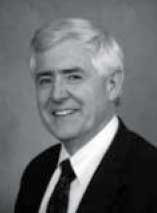 Butch Baker
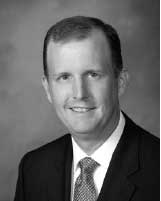 Jim
Lowe
Jim
Lowe